Project Press /

Oskar Blues Considers Fort Collins

Longmont-based Oskar Blues Brewery, just six months after opening a restaurant on the southern edge of Longmont, is considering opening another — most likely in Fort Collins.

“This year is starting off with a bang,” said Dale Katechis, founder of Oskar Blues.

In early February, Oskar Blues’ architectural design firm submitted a conceptual review application to the city of Fort Collins for a remodel of 350 Linden St., a 101-year-old building called the Union Pacific Freight Depot, according to city documents.

The application proposes a 300-seat restaurant in the 6,600-square-foot space that is vacant.

“The Fort Collins thing, it’s become quite a buzz up there in the market,” Katechis said. “It’s a little premature. We have submitted plans, but we haven’t secured the site yet.”

Katechis and other Oskar Blues officials are in discussions with the building’s owner on a lease and remodel of the property. The Kluver-Moore Foundation is listed as the property’s owner, according to Larimer County Assessor records.

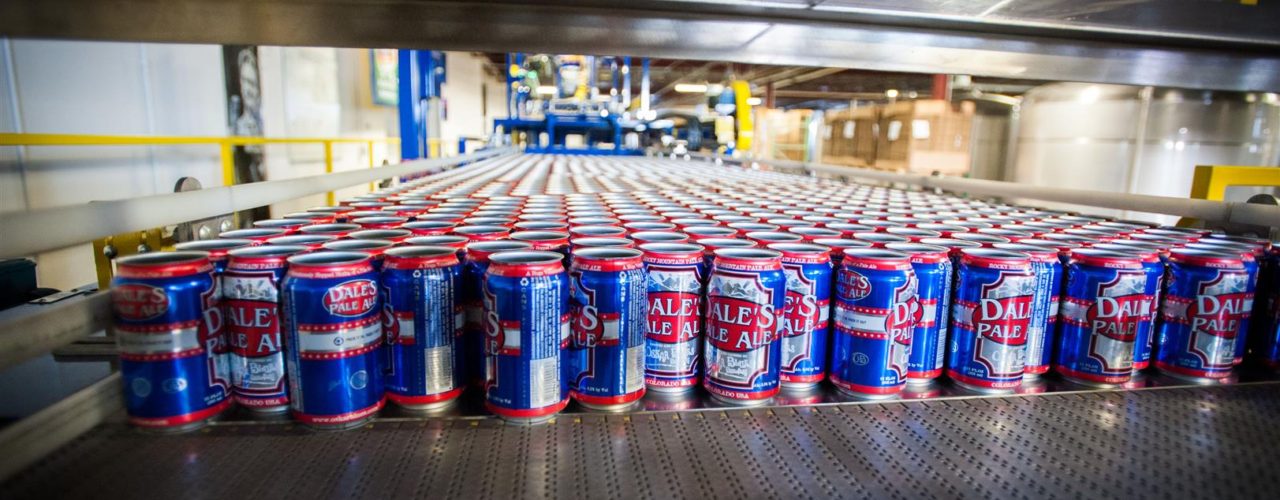
The prospect of Oskar Blues opening a third restaurant comes on the heels of the company, known for its canned craft beers, seeing triple digit revenue growth last year. It also recently announced plans to add two more 200-barrel fermenters to its Longmont brewery, bringing annual brewery output to 40,000 barrels.

If the talks in Fort Collins work in Oskar Blues’ favor, Katechis said the brewery would move forward with creating a “craft beer bar” and restaurant reminiscent of the Oskar Blues Home Made Liquids & Solids restaurant that opened in Longmont in October. That establishment has 43 craft beers — most of which are hard-to-find — on tap, southern-style food, a host of random adornments on the walls and a neighboring silo repainted as a beer can and filled with a handful of video games and pinball machines. Oskar Blues also continues to operate its original location in Lyons.

If Fort Collins doesn’t pan out, Katechis said he would move forward with a property he has eyed in Boulder.

However, he added, Oskar Blues is fairly far along in the due diligence process for the Fort Collins building.

“(A Boulder restaurant is) an option, but right now, we’re taking it one at a time,” he said. Katechis declined to discuss further specifics of a potential Boulder location.

The microbrewery-friendly city of Fort Collins and the building itself were attractive to Oskar Blues, said Tim Trapp, founder of Trapp Associates Ltd., a Boulder-based restaurant designer that is heading up Oskar Blues’ latest endeavor. The former depot has a “unique personality” to it, with its turn-of-the-century architecture and history as a train depot.

“We all feel pretty strongly about Fort Collins,” Trapp said. “It’s right down the street from New Belgium (Brewing’s) campus … Gee whiz, we sort of sheepishly grin, you’d have to go past us to get to them.”

The restaurant would be three-tenths of a mile southwest of New Belgium’s 500 Linden St. site.

The restaurant also would fill a building that from 1992 to 1995 housed New Belgium’s then under 40-employee operation, said Bryan Simpson, spokesman for New Belgium.

“I surely do think there’s plenty of room (for another brewpub),” he said of Oskar Blues, a “friend” that helped New Belgium in its canning of Fat Tire.

“… It’s a great, diverse brewing community.”


(Source: Alicia Wallace, Daily Camera)

Expertise Interview /

Secrets of Successful Outdoor Dining

“Creating outdoor dining space has become a sort of collective madness in the restaurant world.

It’s not just the allure of dining outside, enjoying warm sun or soft breezes that drives this trend; it’s also the tangible business benefits of increasing the number of available tables a restaurant has to sell.

Restaurants often try to capitalize on outdoor opportunities to get more patrons into their business. For example, katy vibes has just opened a new patio area and have an option to dine outside. This brings more customers in on hot days! To find out more visit here: katy vibes: real food, real entertainment.

The result is outdoor dining just about everywhere – on porches, decks, rooftops, in parking lots, and, in some urban locations, on commandeered stretches of public sidewalk space.

The results can range from delightful to horrific; in the latter category a dining deck located immediately downwind of the restaurant’s dumpster comes to mind.

What does it take, then, to create a truly attractive outdoor dining space? We know how to do it at home, just take a look at some patio furniture sets and choose the most comfortable one, create an overhead canopy so that you’re not thwarted by changing weather, hang some fairy lights around the garden, and make sure you face in the direction of the best views. As it turns out, it’s not much different for restaurants.

In a recent article in “Restaurant Hospitality” authored by Gina LaVecchia Ragone, Tim Trapp, principle in a Boulder, Colorado-based restaurant design firm, shared his thoughts on the subject.

One of his primary observations was the importance of making sure that outside dining offered something comparable to what a patron sitting inside would experience – equal levels of comfort and service are essential.

He also discussed the importance of layout and design. Ideally outdoor dining should be accessible without the staff having to march through the dining room, creating drafts and disruption.

Moreover, it’s important than any outdoor space add-ons are within the capacity of the restaurant’s infrastructure – kitchen, warewashing, food storage, and the like.

Putting an “emotional lid” on an outdoor space is also a best practice. Sitting under an open stretch of sky can, Trapp asserts, be vaguely disconcerting. He suggests using latticework or strings of lights to give an al fresco space a sense of overhead definition. It would also be worth installing something like outdoor gooseneck lights to ensure that there is brighter lighting in areas that are busier, like doorways and toilet areas to ensure people can clearly see.

There are some noteworthy outdoor dining spaces here in Western Massachusetts.

Some have spectacular views; the champion on that score is the Golden Eagle Restaurant in Clarksburg, which is located on Route 2’s “hairpin turn.” Its dining room and balcony offer amazing “hundred mile” vistas of the distant Taconic range.

More intimate in terms of outdoor perspectives is Alvah Stone in Montague, with its deck looking out across a wooded glade through which the Sawmill River flows.

I’m also a big fan of two urban spaces. Both are in Northampton, and both are second story dining porches. One is at Mulino’s on Strong Avenue; the second is part of Osaka on Old South Street. Both offer something akin to the sidewalk dining experience but without the street level noise and distraction.

An oasis of elegance created from parking lot space is the outdoor dining offered by the 350 Grill on Worthington Street in downtown Springfield. Linen, attractive furnishings, and an intimate sense of enclosure work to bring the indoors out into the night air.”

(Source: Hugh Robert, masslive.com)

Project Press /

Evergreen Expecting Two Breweries

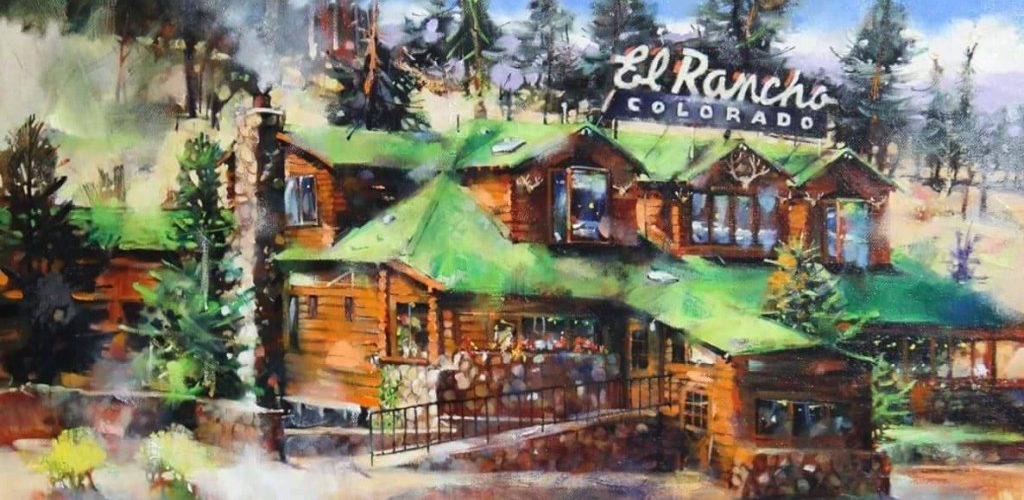
The historic El Rancho restaurant and conference center, which closed in 2012, is set to reopen later this year under new ownership as a brewpub; the iconic log-cabin building (that inspires many to look into their own log cabin kits), which sits just off of I-70 at the exit for Evergreen, has a storied history. The original log-cabin eatery was built in 1947, long before the interstate came through. In 1953, it was purchased by Ray and Mildred Zipprich, who added a banquet business, gift shop and U.S. Post Office station. Five years later, their daughter and son-in-law, Donna and Paul McEnroe, took over. The family sold it in 1988, and the building has had a succession of owners since the

In March, the Vincent family – three brothers and their wives – bought it for $1.2 million; they plan a major renovation that will include a beer garden and brewery, led by former Dad & Dude’s Breweria brewer Bard Nielsen. Architect Tim Trapp, of Trapp Associates, is designing the overhaul; Trapp has worked on several other breweries, including the Walnut Brewery in Boulder, various Rock Bottom locations and the Denver ChopHouse.

But El Rancho isn’t the only brewpub slated to start pouring beers in Evergreen this year. Anders and Debbie Ruikka, who bought the Evergreen Conference Center two years ago, are adding their own brewery and restaurant to the facility by fall. It wouldn’t come as a surprise if it includes the likes of these old whiskey barrels, as well as any other brewing supplies they may need to make these features a success. Originally called Fireweed Brewing, the business recently had to change its name to Lariat Lodge Brewing in order to avoid a trademark battle with a similarly named whiskey brand from a Montana distillery.

But that hasn’t slowed things down, says Anders, who just began demolition and plans to open the brewpub in September. Eric Rode, formerly of Tommyknocker Brewery in Idaho Springs, is a co-owner and will run the five-barrel brewing system. “Together, we have been working on this concept for two years,” Anders notes. “We have had a lot of good response already. It’s amazing.”

Will it be too much beer for Evergreen? Probably not, says Anders, who is excited about the El Rancho news: “I think that is going to be awesome.” After all, who isn’t excited about a place with some exquisite Beer Wall!He also points out that El Rancho is eight miles away from the Evergreen Conference Center and is often more associated with Golden than with Evergreen. Besides, he adds, “beer is always a good thing.” Perhaps that quote would make a great slogan for some promotional brewery swag that could help market the business.

The Ruikkas told Jefferson County that they plan to spend $300,000 to remodel the space, which will have seating for about 100 people

Westword

http://www.westword.com/restaurants/evergreen-expecting-two-breweries-this-year-el-rancho-and-lariat-lodge-6739437